
Hero Story - News
News
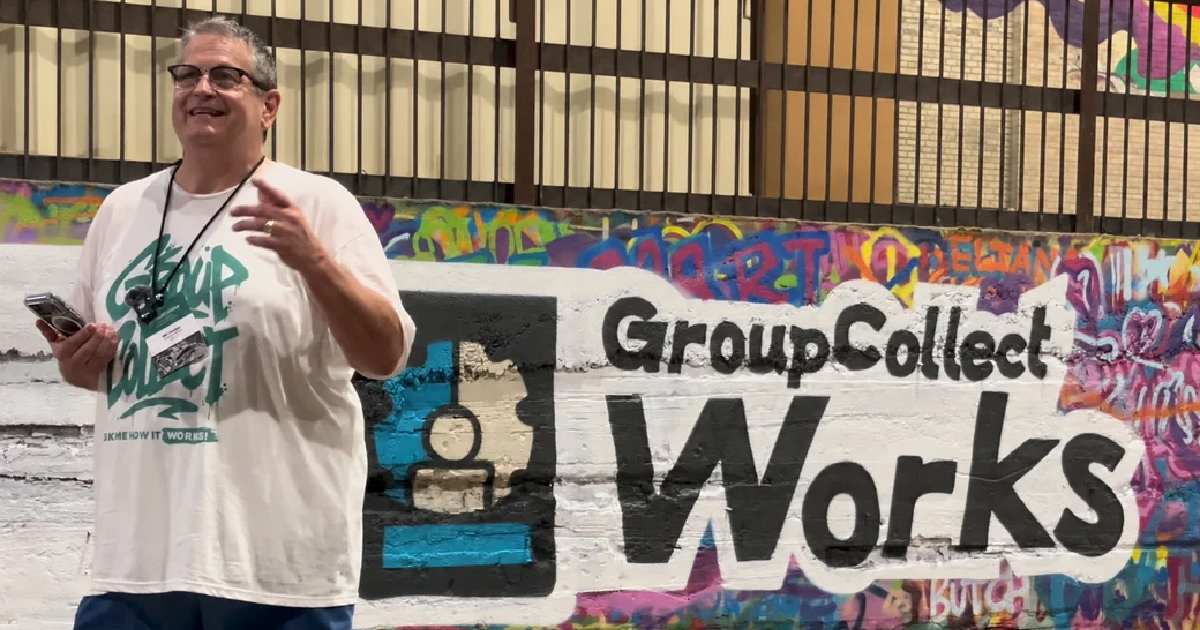
GroupCollect Announces New 'Works' Product
GroupCollect, a company that builds technology for the group travel industry, has introduced a new product, GroupCollect Works, a modern group travel operations platform designed to help tour operator...
Read MoreBus Driver Hour Tracking: Changes Tour Operators Need to Know
I recently attended the Bus Industry Safety Council meeting held during the American Bus Association annual conference in Charlotte, North Carolina. The agenda over the three-day session was packed with presentations designed to enhance the safety of motorcoach operations, for drivers and passengers. Electronic logging devices (ELDs) were covered in detail, compelling me to share some information.
A long time in the making, a new rule requiring the use of ELDs became enforceable on December 18, 2017.
It all started in July 2012, with the highway reauthorization law known as Moving Ahead for Progress in the 21st Century Act (MAP-21). Based on this Act, Congress required the Federal Motor Carrier Safety Administration to mandate that motorcoach operators and drivers use ELDs to track driver's hours. On December 10, 2015, FMCSA announced its final rule, requiring use of ELDs by all drivers who had been required to complete paper records.
The rule applies to all commercial motor vehicles (CMV) meeting any of these descriptions:
✓ Weighs 10,001 pounds or more.
✓ Used to transport nine or more passengers (including the driver) for compensation.
✓ Designed to transport 16 or more passengers (including the driver), not for compensation.
There is a grace period for violations until April 1, 2018; however, at least 11 state jurisdictions have announced they will issue citations for operating without an ELD at the officer's discretion in California, Colorado, Delaware, Idaho, Indiana, Minnesota, New Hampshire, New Mexico, Washington, West Virginia and Wyoming.
What Does This Mean?
You must clearly understand the travel time and the hours a motorcoach driver would be on duty during your trip.
To summarize the hours of service (HOS) regulations for passenger-carrying drivers:
- A motorcoach driver may drive up to 10 hours, after eight consecutive hours off duty.
- A motorcoach driver may not drive after having been on duty for 15 hours.
- A motorcoach driver may not drive after 60 hours on duty over seven days or 70 hours on duty over eight days.
- Drivers sign on to the device and are then On Duty. When the vehicle moves, the device automatically changes their duty status to Driving. When the vehicle stops, the duty status changes to On Duty. Drivers can select Off Duty when the vehicle is stopped and the engine is off. When the vehicle starts moving again, the duty status changes to Driving.
- In all circumstances, drivers must be able to show a roadside inspection officer a graph-grid of their hours of service compliance, either on the ELD's display or on a hardcopy paper printout.
- If an ELD malfunctions, it must be reported within 24 hours and fixed or replaced within eight days. During such an outage, the driver must be able to reconstruct the previous seven days for a roadside inspector.
- If during a trip the driver is approached by an inspection officer, that officer will not enter the bus. The driver must make the ELD display visible to the officer, so the officer can confirm adherence to the hours limitations.
In the past, as unexpected delays or situations arose, the driver might extend his or her hours to get the tour to its final destination. With electronic logging, that won't be possible. The final rule even includes provisions to guard against harassment of drivers. Specifically, the rule prohibits motor carriers from using information from ELDs to pressure drivers into violating regulations.
Drivers can make edits and annotations to their electronic logs; however, the edits will not overwrite the original record, which will be retained. Employers of the drivers will be able to request edits or annotations, but those must be approved by the driver.
The purpose of this change is to improve motorcoach travel safety. The FMCSA hours of service rules are designed to eliminate the type of drowsiness that can lead to crashes and that is important for the safety of you, your staff and the travelers.
Here's wishing you all safe and healthy travels!
Written by Michael J. Bowers, Safety Consultant, Center for Student Travel Safety.


© 2026 Groups Today - All Rights Reserved. Read our Terms and Conditions